
2Annual
Highlights


In FY24
The Future Fund Board of Guardians
We were pleased to welcome four new Guardians to the Board this year, including our new Chair:

The Hon Greg Combet AO
Chair

Ms Mary Reemst

Ms Rosemary Vilgan

Ms Nicola Wakefield Evans AM
These new Guardians joined our current three Members:

Mrs Patricia Cross AM

Dr Deborah Ralston

Mr Michael Wachtel
We also promoted 32 people internally into new roles this year. Congratulations to:
- Rhiannon Parker
- Calvin Chan
- James McKenzie
- Minh Do
- Richard Cooney
- Ben Samild
- Andrew Pearse
- Darina Cheong
- Jennifer Gao
- Hugh Murray
- Paul Banks
- James Waldron
- Michael Vardi
- Jenny Truong
- Claire Harrison
- Thao Truong
- Louise Pride
- Ross Thompson
- Sonia Barr
- Chris Leverkuehn
- Lara Babic
- Justin Reys
- Sofian Cendana
- Stephen Siu
- Jessica Chiu
- Sandy Smith
- Robin Lim
- Georgia Hamilton
- Tara Lagan
- Harry Hadiyanto
- Will O’Sullivan
- Jordonne Colley

Portfolio activity in 2023–24
As we have been saying over recent years, the world is changing.
A New Investment Order has been evolving. Underpinning this is a range of paradigm shifts impacting the world order, macroeconomic drivers, policy decisions and financial markets.
These shifts – including inflation regimes, climate and decarbonisation, deglobalisation, technology disruption and changing asset correlations – are coalescing to have a profound impact on the longer-term investment environment. This is, in our view, significantly increasing economic and market complexity and volatility, and making forward-looking returns more difficult to earn.
This view is giving us cause to reappraise how we invest in order to continue to achieve our investment purpose, with a significant focus on making the portfolio more resilient to multiple possible scenarios presented under the New Investment Order.
The diagram below outlines our investment process and portfolio evolution since 2020.
In continuing to evolve our portfolio we have made over $50 billion of changes for the 2023–24 financial year alone, with repositioning occurring across almost all asset classes.
Portfolio activity has been balanced across two focal points:
- The pursuit and execution of investment opportunities that will generate long-term risk-adjusted returns; and
- Building resilience to the risks and possible scenarios presented by the New Investment Order.
We have discussed the New Investment Order and a number of changes we’ve made to our investment portfolio in response – totalling some $190 billion over a three-year period to date – through our thought leadership papers, including in our third and most recent paper, released in June 2024 – Geopolitics: The Bedrock of the New Investment Order.
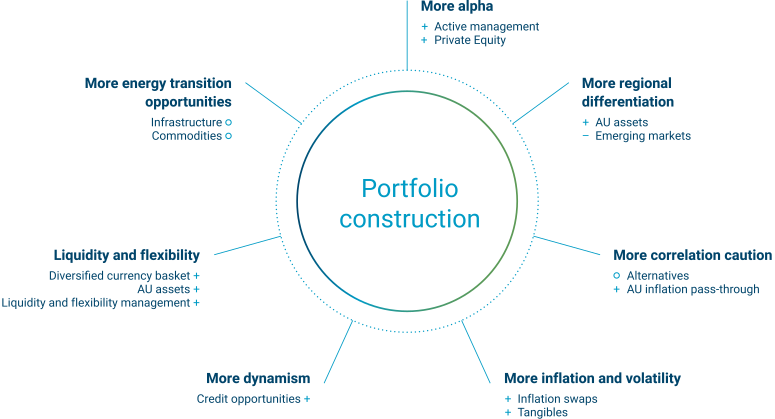
Focusing on some of the highlighted zones in Diagram 1:
- We positioned the portfolio at the middle of our structural risk range across the financial year, and continued to make changes towards investments that rely on investor skill rather than market risk – more alpha – reflecting our belief that this approach will be better rewarded in an environment where higher inflation, interest rates and geopolitical risk make market/beta returns less certain.
An example of this change was our further shift back to active management in listed equities, with a focus in 2023–24 on Japanese equities due to healthy corporate balance sheets, positive changes to corporate practices and reasonable valuations.
While private equity activity was again slow across the year, we sustained our private equity co-investment strategy and continued our investment in early-stage venture opportunities through our high-quality private equity managers.
We also provided capital to high-quality property managers during the year to position ourselves for opportunities ahead given the recent re-rating of property valuations. - We also continued our preference for domestic infrastructure assets – more regional differentiation – given their ability to hold value in a higher-inflation environment and to provide predictable cash flows. An example is the Future Fund’s investment in Connect East – the Eastlink toll road, in June 2024. Under regional differentiation we also further reduced our exposure to China, reflecting ongoing challenges to the country’s existing economic growth model, and rising geopolitical risk.
- With the focus from our Treasury Management function, we were able to create liquidity and flexibility across the portfolio to allow us to harvest investment opportunities when they arose throughout FY24. This allowed us to respond nimbly and at scale – more dynamism – to attractive pricing available in investment-grade credit, utilising existing managers to help us capture strong nominal returns from simple capital provision to low-risk, high-quality opportunities.
Beyond investment-grade credit we also leaned into credit opportunities presented in other strategies such as special situations, direct lending and private credit.
Our total level of activity across the Credit asset class exceeded A$7 billion for the year, funded through cash, and reducing complexity elsewhere in the portfolio.
Previous work under more dynamism in uplifting our portfolio governance arrangements and investment process was also instrumental in this capital shift.
Under liquidity and flexibility we also further increased the amount of developed market currency we hold, reducing our foreign exchange hedging requirement that can be a drain on our liquidity. - Consistent with the structurally higher and more volatile inflationary scenario – more inflation – we made a number of changes in rates and currency markets throughout the year and built a meaningful exposure to inflation. These changes totalled more than A$30 billion and there was a reduction in our global interest rates exposure across the year, reflecting our view that government interest rate exposure is less diversifying and less well rewarded than over previous decades. We instead hold our duration through assets like infrastructure that also help us capture more inflation, while obtaining additional diversification through currency, commodities and alternatives.
- With this in mind we continued to refine our alternatives portfolio, reducing hedge fund exposures that we believe are being challenged by the New Investment Order and replacing them with new ones that are truly diversifying in this longer-term investment environment – therein generating liquidity for the total portfolio.
As outlined in our recent position paper on geopolitics, given our view on the need for more correlation caution, and in our quest for portfolio resilience, we view our alternatives exposure as a key source of diversification. - Finally, we are continuing to work on an exciting pipeline of energy transition opportunities. Transition goals and the need to finance them are creating significant strategic competition for capital that hasn’t been seen for years, and in an environment where sources of capital are being more heavily scrutinised, there is a potential comparative advantage for the Future Fund.
Similar portfolio activity occurred for the Medical Research Future Fund, the ATSILS Fund, the Future Drought Fund, the Disaster Ready Fund and the Housing Australia Future Fund. We continue to diversify those five funds and build exposures to high-conviction and capacity-constrained managers.
Snapshot
The launch of the Housing Australia Future Fund

On 1 November 2023, the Housing Australia Future Fund (HAFF) commenced – a new $10 billion fund to support social and affordable housing across the country.
The returns from the HAFF will bolster the Australian Government’s ability to make grants in relation to acute housing needs and create a pipeline of funding for social and affordable housing through annual distributions from the Fund. The creation of the HAFF means we now manage seven funds for the Australian Government.
The Future Fund Board of Guardians agreed upon an investment strategy for the HAFF in line with the long-term benchmark target return of CPI + 2.0% to 3.0% per annum. The HAFF completed its transition to its long-term investment strategy at the end of the 2023–24 year.
We are proud the Government has given us the responsibility for delivering investment returns for the HAFF.
Snapshot
The role of alpha in Japan
Our search for persistent alpha opportunities in the equity market continued over the past year, leading us to Japan.
The Japanese equity market had been largely abandoned by foreign investors following decades of subdued equity market returns. Passive government investment and sustained investor outflows have resulted in a material consolidation of the investment manager landscape and lower sell-side coverage. This environment created a highly asymmetric landscape for a small number of skilled investment managers.
The market has been attractively valued, with structural tailwinds created by corporate reform strengthening our thesis for active engagement.
Snapshot
New Blackstone private credit mandate
In 2023–24, we committed an additional US$1 billion to the world’s largest alternative asset manager Blackstone, to invest in multi-asset private credit.
This new mandate will pursue investments across a range of credit sectors globally and allows us to capitalise on attractive opportunities emerging in the private credit markets.
Future focus: Establishing the Long-Term Forum
Over the past year we continued to take significant steps to adapt to the New Investment Order and refresh our investment model. To help us in this we established the Long-Term Forum (the Forum).
The Forum is a people and data-centric collaboration platform informing the continuous review and enhancement of our long-term investment strategy, including:
- Assessing the secular investment environment: informed by both internal and external research and insights given an ever-evolving investment landscape.
- Developing a deep understanding of the total portfolio: the Forum considers the interplay of risk and return by applying different lenses across the overall portfolio.
- Exploring potential portfolio responses: discussions centre around how to improve the portfolio by increasing return potential and resilience via different levers.
Driving long-term performance
As a key driver of our investment performance over time, our long-term portfolio decisions are some of the most impactful that the Investment Committee (IC) and Board make. The establishment of this new Forum recognises the importance of these long-term portfolio decisions and the value we can generate from our joined-up investment process.
The Forum was established to generate and deliberate on long-term portfolio ideas across asset classes to support recommendations to the IC, to ultimately drive better long-term investment performance.
“The Forum rebalances our time from what is urgent to what is most important for driving long-term investment performance,” explained Andrew Pearse, Head of Economics and Capital Markets.
A collaborative and agile approach
Initial Forum meetings have focused on examining and evolving our Foundation View.
This sets out the high-level picture of the long-term, top-down, macro and market landscape that the Investment Team is expected to navigate.
It is our way of describing a set of investment scenarios for the decade ahead and is called our Foundation View because it’s the starting point for the Investment Team to form their views.
As factors such as heightened geopolitical risks, artificial intelligence, climate change and demographics provide additional uncertainties and new investment opportunities, having a platform to work through the implications of these thematics on our long-term investment strategy is increasingly important.
The Forum helps us bring together our best thinking, whether sourced internally, from external research or our partners, to enhance the most important investment recommendations and decisions we make.
The inaugural Future Investors Program
The Future Fund’s Future Investors Program is a four-week internship curated for curious and astute penultimate and final year undergraduate students with a keen interest in finance and investing.
The immersive Program was aimed at helping to bridge the gap between academic learning and real-world practice and experience. We welcomed 12 Future Investors in June to our Melbourne office, who were immersed in the dynamic environment of the Future Fund and the world of global investment funds management.
Under the guidance of our Investment Team and other team members, our Future Investors contributed to real investment projects and initiatives, bringing their diverse skills and fresh perspectives into our strategic decision-making processes.
One of the highlights included a visit to the Port of Melbourne to experience the scale of our investments, and to see part of the infrastructure portfolio.
Our interns also participated in our annual Investment Competition. This involved working in cross-functional teams to devise a solution to the question: ‘What is EEE and what would we do differently?’
EEE is the Future Fund’s unique tool which helps to measure how much investment risk exposure is taken at the Fund level, which then corresponds to how much risk the Board of Guardians thinks the Fund should take on average.

In the final week of the Program, each Future Investor presented an individual project that they were working on throughout their time at the Future Fund. The intelligence, innovation of thought and professionalism in all our Future Investors’ presentations perfectly encapsulated their time and experience with us.
Snapshot
The Future Fund Academy: empowering professional growth and leadership development

At the Future Fund, the professional, personal and leadership advancement of all our people is a key priority, and the Future Fund Academy plays a crucial role in enabling this.
In 2023–24, the Academy ran 39 development programs, including 21 new-starter orientation days, 11 essential skills programs, four leadership programs, and three investment management programs.
The Academy also plays a critical role in cultivating and driving the joined-up collaborative culture that the Future Fund is known for. This is facilitated through the Academy by embedding our culture into all of its key programs, such as in-person orientation programs for our new starters and leadership development programs which reinforce the role leaders play in maintaining the health of our culture.
This year, the Academy also developed a bespoke investment management program, incorporating insights and learnings about the Agency’s unique joined-up, whole-of-portfolio investment approach, which is crucial to our culture.
To support our objective of continuing to deliver strong investment returns, throughout the training special focus is centred around our investment framework, fund manager selection, and driving decision quality.
Snapshot
Enhancing the Agency’s systems and processes

We achieved a significant milestone this year by completing the first of two phases of our Enterprise Resource Planning (ERP) project.
This accomplishment marks a transformative shift in how we manage and integrate information across the Agency.
The introduction of our new ERP solution has streamlined multiple processes across the Agency’s corporate teams onto one single platform, replacing the disparate systems previously in use.
The integration of this technology solution underscores our commitment to the continuous evolution of our systems and processes, as part of our strategy to mature our organisation and to innovate and evolve.
The implementation involved over 35 integrations between the new ERP solution and 15 supporting systems.
Looking ahead, we are on track to finalise the second phase of the project in FY25. This involves enhancing the solution, as we continue to look at ways to work more flexibly and collaboratively.
Investing in Australian infrastructure
The Future Fund is one of the largest investors in infrastructure assets in Australia with around $11.8 billion, or 57%, of our global infrastructure portfolio represented domestically.
In partnership with our external investment managers we proudly own stakes in iconic Australian infrastructure assets such as the Port of Melbourne, Sydney, Perth and Melbourne airports, and Tilt Renewables, amongst others.
This year we added to our infrastructure portfolio with the acquisition of a 19.8% interest in the EastLink toll road network. EastLink is a 39km tollway located 25 km east of the Melbourne CBD and is the largest tollway network in Victoria. Running predominantly north-south, EastLink connects Melbourne’s eastern and south-eastern suburbs which have limited connectivity via public transport. EastLink is also a major feeder route for the Eastern Freeway and Monash Freeway. An average 250,000 vehicles, including 50,000 commercial vehicles, use the toll road daily.
Kudrat Puri, Manager, Unlisted Infrastructure and Timberland, said: “Our investment in EastLink will provide attractive characteristics to our portfolio, including direct linkage to Australian inflation, AUD-denominated cash flows, and exposure to favourable macroeconomic drivers in Victoria, with Melbourne projected to overtake Sydney as Australia’s largest city by 2030.
We expect the investment to deliver an attractive return over the long term, particularly in a ‘sticky inflation‘ environment,” added Kudrat.
We partnered with QIC in this acquisition, who have a long-established relationship with the Future Fund and will manage this investment on our behalf, leveraging their long-held experience in the transport sector.

CDC Data Centres
Another of the Future Fund’s high-quality infrastructure assets is CDC Data Centres (CDC). CDC is a leading owner, operator and developer of highly secure, sovereign and connected large-scale data centres across Australia and New Zealand.
Data centres store and manage the critical data and digital infrastructure systems that communities and organisations rely on for their operations. The data centre sector is seeing a surge in demand due to significant growth in generative AI and cloud-based solutions and is expected to grow exponentially over the next several years.
CDC currently owns 14 operational data centres. In response to the transformative shift in customer demand, CDC also has a significant investment pipeline with seven additional facilities currently under construction across Sydney, Canberra, Melbourne and Auckland. Once fully constructed, these new facilities will increase CDC’s operating capacity from 302 MW today to 690 MW, positioning CDC to capture the significant sector growth opportunities into the future.
The Future Fund is a 24% shareholder in CDC alongside Infratil, Commonwealth Superannuation Corporation and CDC management.
Tilt Renewables
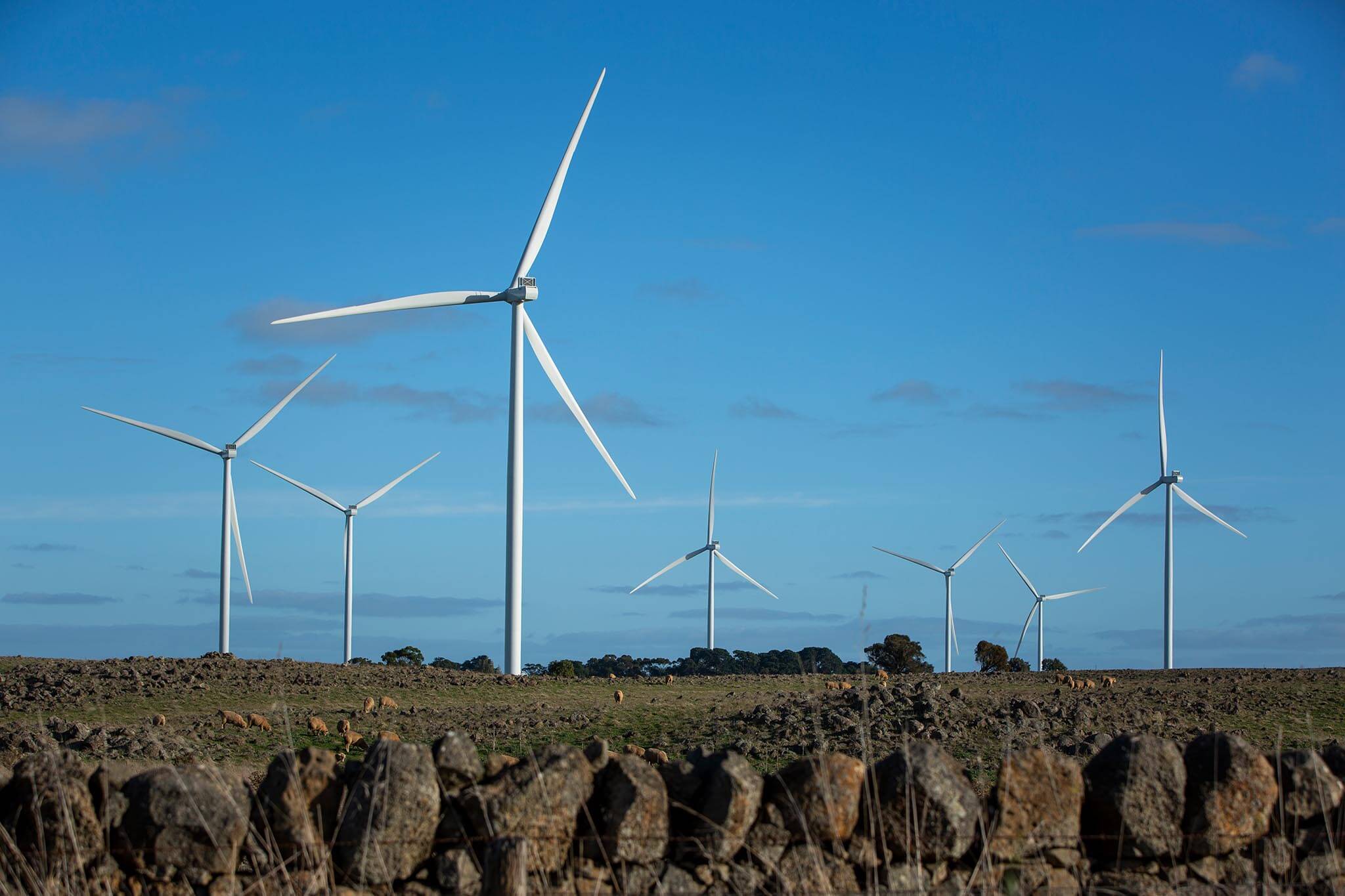
Tilt Renewables (Tilt) is another quality asset in the Future Fund’s Australian infrastructure portfolio. As an Australian-owned and operated business that is helping to drive the energy transition in Australia, Tilt is the largest owner of wind generation in the country.
The Future Fund owns 40% of Tilt, alongside QIC and AGL, making us one of the largest investors in renewable energy in Australia.
Tilt currently has seven operating wind farms with six more under construction or in development, as well as two operating solar farms. Tilt is also building a battery energy storage system in the Latrobe Valley in Victoria.
Tilt engages in the development and operation of electricity generation and storage assets across the National Electricity Market (NEM) and has 1.8 GW in operational and under-construction assets and 1.8 GW of late-stage development projects, in addition to other early-stage development opportunities across wind, solar and battery storage.
Variable renewable energy and storage is critical for reaching Australia’s target of 82% of electricity from renewable sources by 2030. The Australian Energy Market Operation estimates that over 100 GW of grid-scale wind and solar and 45 GW of storage capacity need to be added to transition the NEM to net zero emissions by 2050. With a dedicated development team and pipeline of projects, Tilt expects to play a key role in delivering this transition.
Sharing our insights
We’ve had a busy year sharing our insights and perspectives across the industry.
In FY24 our people spoke at over 60 events in Australia and internationally, delivering keynotes at large public conferences, participating on panels at various industry forums, and engaging in more informal fireside chats.
“As Australia’s sovereign wealth fund and given our position as a successful long-term global investor, we believe we have a role in contributing our insights with a view to enriching debate and discussion on topics that are relevant and important to investors,” said Will Hetherton, Head of Corporate Affairs.
The Future Fund has worked with a joined-up whole-of-portfolio approach since inception, so it was fitting for CIO, Ben Samild, to contribute a chapter to a report published by the CAIA Association this year: The Rise of Total Portfolio Approach. The report provided a deep analysis of the total portfolio approach with regard to governance factors, culture, and competition for capital, amongst other things.

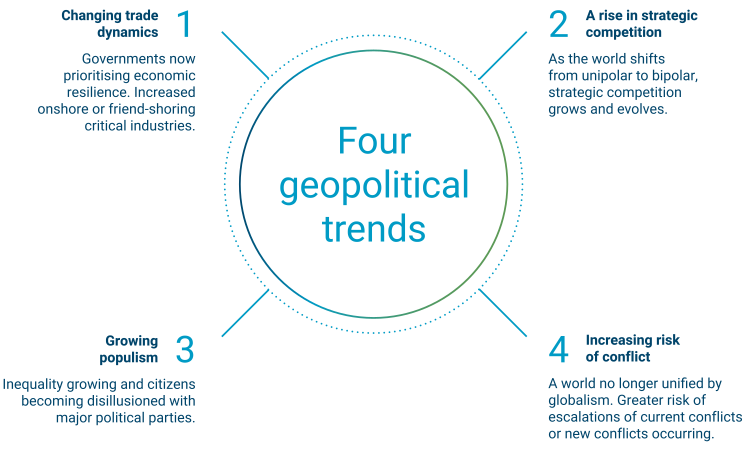
This year we also published a new position paper – Geopolitics: the Bedrock of the New Investment Order. This is the third paper in a series, with the first – A New Investment Order – published in 2021 and the second – The Death of Traditional Portfolio Construction? – in December 2022.
Our geopolitics paper talks about geopolitics as a force that has direct and consequential impacts on macroeconomic and microeconomic drivers, policy choices, and financial markets. Considering recent conflicts between Russia-Ukraine and hostilities in the Middle East, as well as the evolving relationship between China and the US, geopolitics is a topic front-of-mind with today’s investors world-wide.
It also outlines four trends that we believe make geopolitics a more relevant frictional influence: changing trade dynamics, rising strategic competition, growing populism, and an increased risk of conflict.
All of our papers are designed to drive debate and discussion in the industry in order to enrich deliberations and decision-making in a more volatile and challenging world, and we have been pleased to see this happening at various industry events this year.
Snapshot
Our Indigenous Strategy

The Future Fund believes that by understanding, engaging and reconciling with First Nations peoples and their culture, we will be better able to contribute to building a more inclusive community.
The Agency’s Indigenous Strategy directs our efforts to raise awareness and facilitate engagement. Work is conducted under three core pillars – promoting and celebrating culture, creating meaningful action, and holding critical conversations.
Reflecting our commitment in this area, activity undertaken as part of the strategy is broad and varied.
As a leading Australian institution, it is imperative that we continue to build strong partnerships with First Nations businesses, as this not only provides access to new capabilities, but also contributes directly to our organisational focus on diversity and inclusion and the benefits this brings to our organisation and investment program.
The Procurement Team has been instrumental in this strategy, promoting the use of First Nations suppliers across the Agency and facilitating these new relationships.
To build understanding and awareness amongst our people, we have hosted a range of events and experiences, including celebrating NAIDOC Week with a Mini Corroboree, hosting an Indigenous guest speaker during Reconciliation Week, holding a morning tea to showcase First Nations suppliers, and coordinating local Heritage Walks for staff.
Our Indigenous Strategy will continue to be shaped by the insights and guidance of the Agency’s Indigenous Working Group, which is working closely with an external Indigenous Advisor on this journey.
Snapshot
Asset class snapshot — Alternatives
Alternatives is an asset class that helps the Future Fund achieve its overall portfolio objectives by delivering returns which are independent of how the broader market performs.

FY24 was a positive year for demonstrating the benefits of an active management approach, with the Alternatives portfolio generating strong “alpha” with minimal correlation to broader risk assets.
Our hedge fund managers were able to take advantage of increased dispersion between the monetary and fiscal policy decisions of different economies. The impact of divergent inflation and macroeconomic conditions between different companies and countries created opportunities across equities, rates, credit, currency and commodity markets.
The Alternatives portfolio represented 15.2% of the total portfolio in FY24, and remains positioned to benefit from increased volatility, or scenarios of market stress, which we believe is important in a world with a more uncertain outlook.
Snapshot
Portfolio holdings disclosure went live in FY24

We now publicly disclose our investment holdings biannually for each of the seven funds we manage.
These periodic investment reports are available on our website under ‘Investment – How we invest’ and will be updated twice per year with information as at 31 December and 30 June.
This reporting furthers our transparency practices, which also includes our regular appearances at Senate Estimates, various public reports such as our Annual Report and Corporate Plan, and our quarterly performance updates.
The periodic investment reporting rules are broadly consistent with what is required of Australian superannuation funds in the Corporations Amendment (Portfolio Holdings Disclosure) Regulations 2021.
We are Futureminded
The Future Fund operates in a very competitive and fast-paced environment with strong competition for quality talent.
Ensuring we have a well-understood point of difference has become more important as we continue to build out our organisation, recruit and retain quality talent, and strive to be an employer of choice.
This year we undertook work to develop and define our organisational employee value proposition (EVP). An EVP is the unique set of offerings and benefits that an organisation provides to its employees showcasing why it is a great place to work.
Captured as: We are Futureminded our EVP sums up who we are, how we work and how we think, and represents our values and the experience of working at Future Fund.
It consists of:
- The material offerings of working with us including financial remuneration, workplace flexibility, physical office space and technological support.
- The development opportunities we provide and encourage through speaking engagements, external courses, internal promotions, Board and committee opportunities and training via our internal Future Fund Academy.
- The connection and community we provide at the organisation which include various internal groups and external partner organisations to join and encourage a deeper sense of industry engagement and belonging.
- The meaning and purpose of our organisation which was established in 2006 and has remained unchanged ever since – investing for the benefit of future generations of Australians. This purpose is often why our people join us and why they choose to stay.
“We were delighted to be recognised in the 2024 Best Places to Work by the Australian Financial Review in June. This, combined with the feedback from our latest recruits and a pleasing retention figure of 91% for the year, all show we are on the right track with our EVP,” said Leila White, Head of Talent, Diversity and Employment Brand.
“We are now looking ahead to continue our recruitment drive, particularly in the Investment Team, and ensuring we remain an employer of choice for our industry.”